The Collections
Scale & Diecast Models
Precision collectible scale models was never marketing fluff in our catalog — it was a dividing line. On one side, toys. On the other, miniature automobiles researched from factory drawings, built by hand in editions of a few hundred, and accurate enough that marque historians use them as reference. This guide explains that world.
The Hand-Built 1:43 Tradition
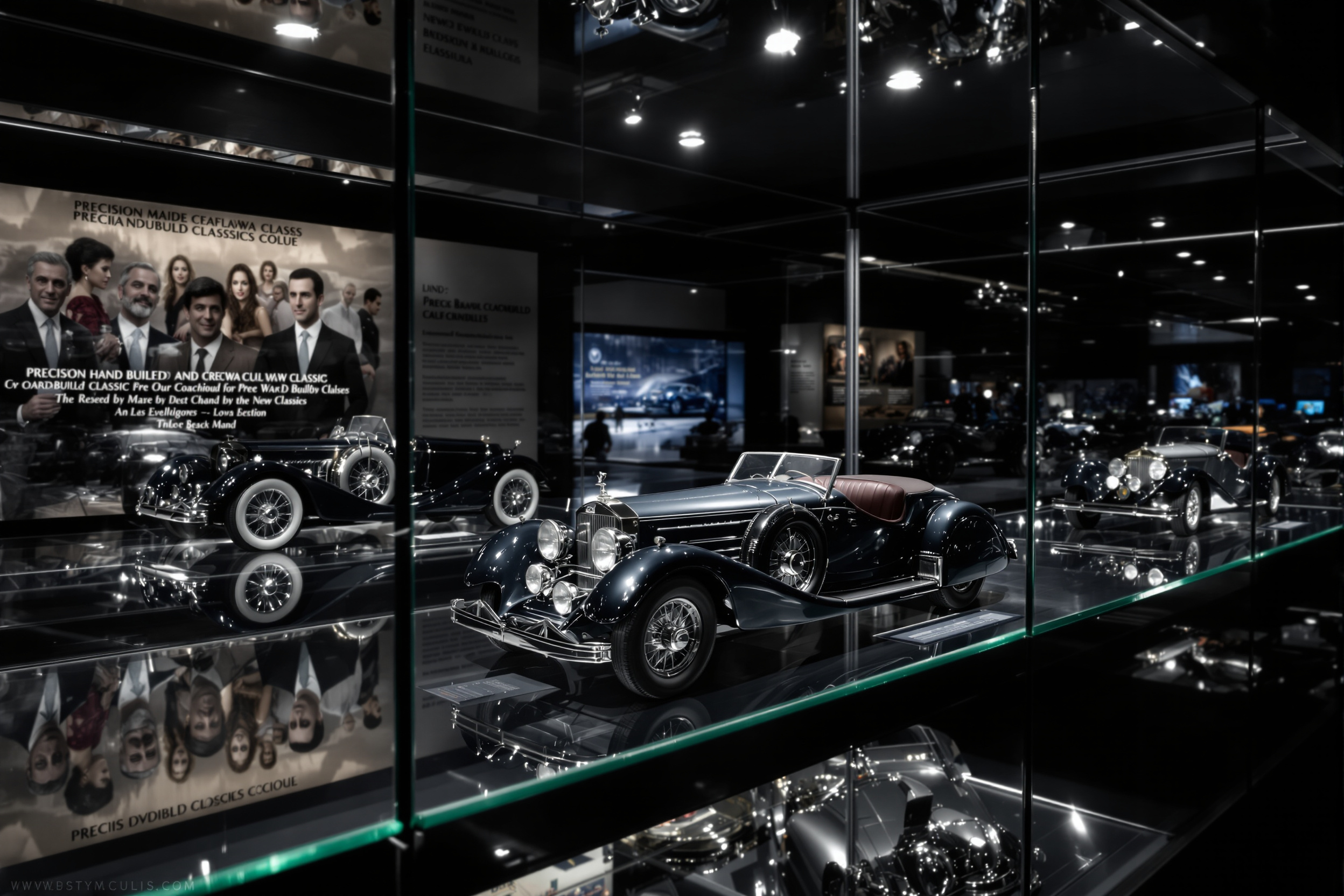
The summit of the hobby is the hand-built 1:43 model: white metal or resin bodies, photo-etched brightwork, hand-applied paint in documented period colors, produced by small ateliers in runs so limited that collectors track individual workshops the way art collectors track painters. The subjects skew gloriously obscure — one-off coachbuilt classics, a specific car as it appeared at a specific 1937 concours, complete with the correct interior piping. Our old catalog’s deepest corner was exactly this: replicas of the golden age, researched down to the hubcaps.
Diecast Display Scales
Mass-production diecast at 1:18 and 1:24 delivers extraordinary value: opening panels, detailed engines, steerable wheels and presence that smaller scales can’t match. The best modern releases — sealed-body resin included — approach hand-built fidelity at a fraction of the price. The trade-off is ubiquity: editions run to thousands, so condition and packaging decide long-term collectibility. (New to all this? Start with our beginner’s roadmap.)
What “Precision” Actually Means
- Documented research — the maker can tell you which real car, in which configuration, in which year the model represents.
- Proportional honesty — correct wheelbase, track and roofline; many cheap models compress proportions to fit standard packaging.
- Material quality — paint depth, plated rather than painted brightwork, real fabric or photo-etched details where scale allows.
- Edition discipline — numbered runs with certificates, not open-ended production.
Repair, Restoration and Insurance
Models break — mirrors first, always — and the hobby has quietly developed its own conservation ethics. Sympathetic repair with correct parts is accepted; full repaints on collectible originals are the model world’s equivalent of over-restoring a barn find, and value follows accordingly. Specialist repairers exist for white-metal and resin work, and parts networks supply everything from period tires to photo-etched wipers. Once a collection passes pocket-money value, photograph it shelf by shelf, keep a simple inventory with purchase prices, and check whether your household policy covers collectibles — many cap them at token amounts unless scheduled. Boring advice, cheerfully given: the collectors who need it most are always the ones who skipped it.
Display and Care
Dust and ultraviolet light are the enemies. Glazed cabinets or individual vitrines solve the first; keeping the cabinet out of direct sun solves the second. Handle white-metal models by the base — skin oils mark paint over the years — and keep original boxes and certificates filed; as with art prints, documentation is value. Museums treat significant models as design artifacts (the toy and model collections at The Henry Ford are a delight), and your shelf deserves the same standards on a domestic scale.
Scale models reward the same eye as fine art: composition, proportion, honesty of finish. The difference is that this art form fits in a bookcase — and occasionally, as our piece on miniature photography shows, it moonlights convincingly as the real thing. For the strangest and fastest corner of miniature motoring, don’t miss the tether cars.