Braking News · Photography
Best Car Photography: Diecast Scale Models? Really?
Here is a fun bar bet for your next car club meeting: some of the most convincing automotive photography you have ever scrolled past involved no automobile at all. Just a 1:18 scale model, a handful of gravel, forced perspective — and a photographer with monk-grade patience.
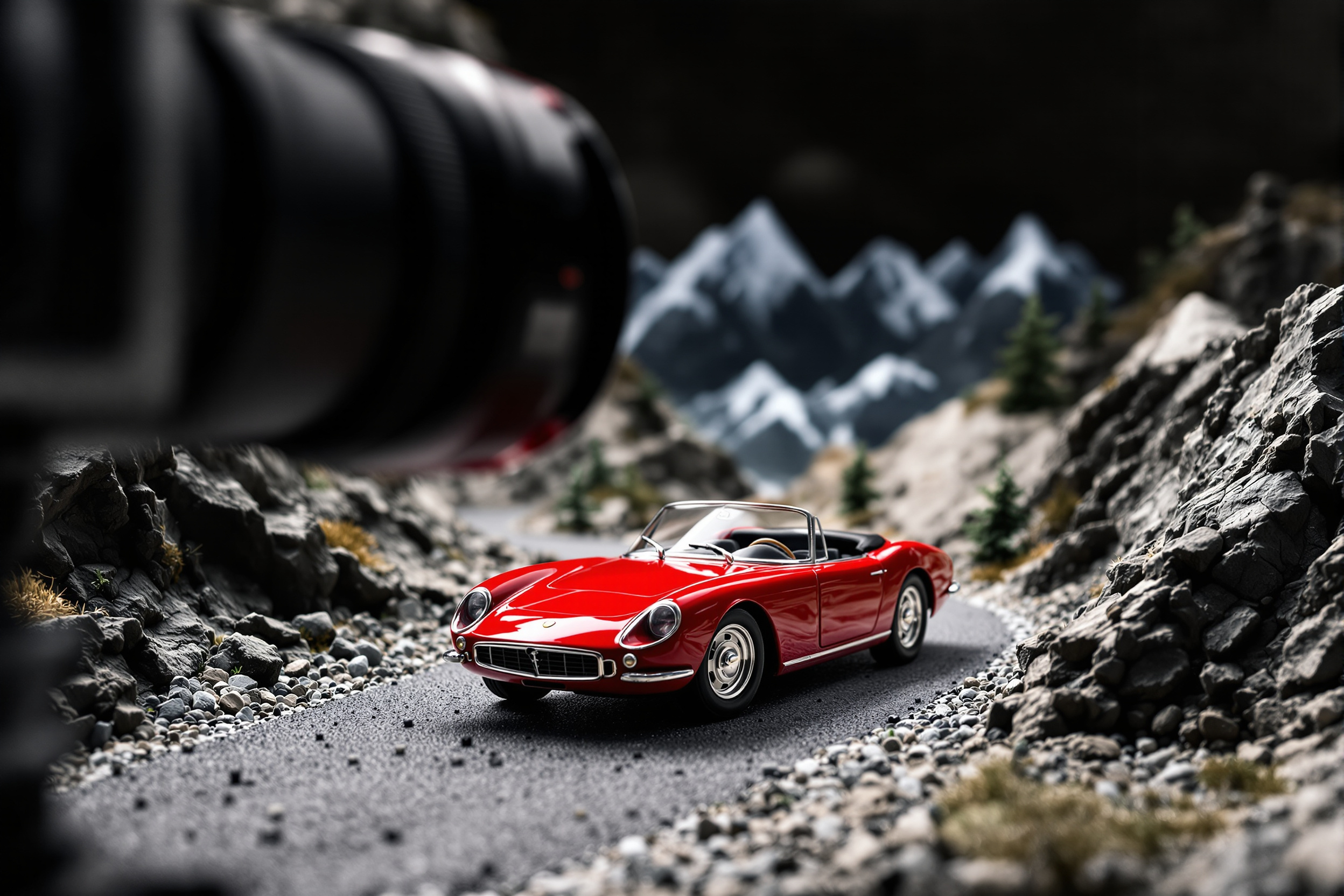
Why Models Photograph So Well
A full-size car shoot fights weather, permits, traffic and the sun’s schedule. A miniature shoot fights none of it. The photographer controls every variable: the light never moves unless asked, the “location” sits on a tabletop, and angles impossible with a real car — lens at ankle height in the middle of the racing line — are trivial when the racing line is twelve inches long. High-end diecast helps enormously: modern 1:18 models carry photo-etched badges, real fabric belts, painted calipers and panel fit that holds up frighteningly well at close range.
The Craft, Briefly
- Shoot low. The single biggest tell of a model photo is a high camera angle. Real cars are photographed by people standing on real ground — get the lens to scale eye-level, which means on the table.
- Real materials read real. Actual gravel, actual dust, a spritz of water for rain scenes. Printed backdrops work; outdoor natural light works even better.
- Mind the depth of field. Macro distances produce paper-thin focus that screams “miniature.” Smaller apertures, focus stacking, or simply stepping back and cropping all preserve the illusion.
- Weather the scene, not just the car. A pristine model on a dirty diorama breaks the spell. Consistent grime is convincing grime.
- Study real photography. The masters compose like automotive photojournalists — motion blur from panning rigs, lens flare at golden hour, negative space. The grammar of the real thing sells the fake.
A Short History of the Trick
Miniature deception has a distinguished pedigree. Film studios spent most of the twentieth century crashing, racing and exploding scale vehicles for the camera, employing model units whose craft standards rivaled instrument makers. Advertising agencies discovered the same economics: when a campaign needed a car on a mountain pass at sunrise, a model unit could deliver the shot without moving anyone’s breakfast. The digital era was supposed to end all this — instead it created a renaissance, as audiences grew fluent in spotting weightless computer imagery and photographers rediscovered that a real object in real light, however small, simply reads as true. Today’s miniature car photographers are heirs to that tradition, working with better models and faster feedback than any studio unit ever enjoyed.
Is It Art? (Yes.)
Photography spent a century earning its place beside painting — institutions like the Museum of Modern Art settled that argument decisively. Miniature automotive photography sits at a wonderful intersection: part photography, part model-making, part set design, with a dash of gentle deception. The best practitioners spend days on a single frame, researching period-correct details the way a painter researches a commission. The results have graced magazine covers and advertising campaigns, with editors none the wiser until the captions came in.
The best part: the barrier to entry is a model you may already own and the camera in your pocket. If our beginner’s collecting guide got you a shelf of diecast, this is what your collection does on weekends.