Braking News · Racing History
Mementos of Racing History: Tether Cars
Before slot cars, before radio control, before video games put a Grand Prix in every living room, there were tether cars — miniature racing automobiles powered by real miniature engines, screaming around circular tracks at the end of a steel cable. They are among the most charismatic mementos of racing history you can put on a shelf, and most car people have never heard of them.
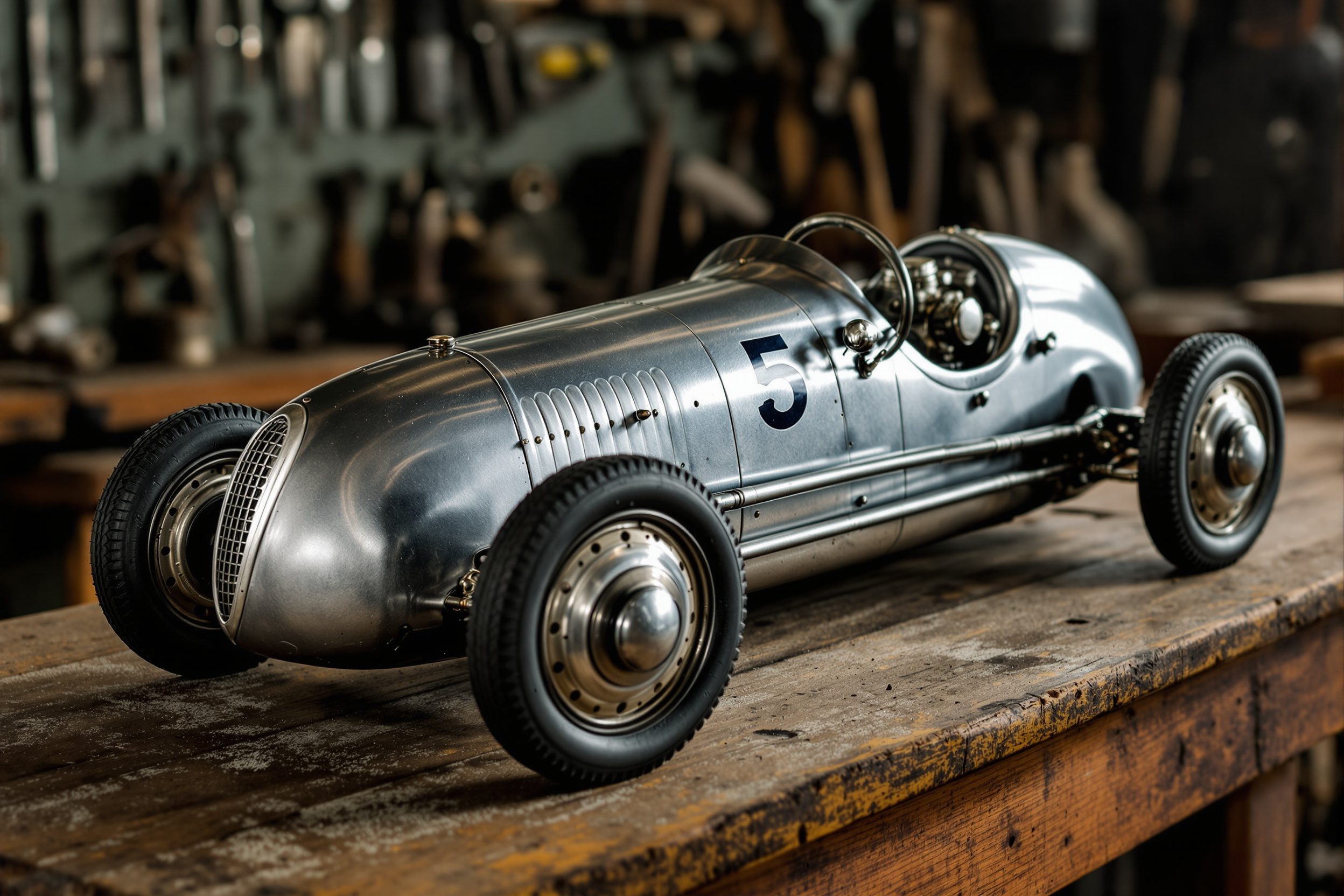
Real Racing, One-Tenth the Size
The sport emerged in 1930s Southern California, where hobbyists — many of them aircraft machinists and hot-rodders — began fitting small single-cylinder gas engines into hand-built miniature racers. Tethered to a central pole on a circular track, the cars ran flat-out in a perfect circle, and the stopwatch decided everything. The machines earned the wonderful nickname spindizzies, and the racing was completely serious: period cars ran well past 100 mph, and modern tether car racing — the sport survives in Europe and the United States — has pushed past 200 mph. With no driver, no brakes, and a cable as the only steering, it remains the purest expression of speed-per-dollar in motorsport.
Tiny Cars, Real Craftsmanship
What makes vintage tether cars so collectible is the construction. The classic examples were cast or machined from aluminum and magnesium, fitted with real spark-ignition engines, proper wheels and tires, and bodywork that lovingly mimicked the Indianapolis and Grand Prix racers of the day — pointed tails, exposed exhausts, hood louvers and all. The famous California makers of the 1940s produced cars whose casting quality embarrasses some full-size machinery. Each surviving example carries its racing history in its scars: scuffed pans from track contact, period repairs, hand-cut gaskets.
How the Racing Worked
Race day had its own choreography. Cars ran one at a time against the clock: the owner started the screaming little engine, lowered the car to the track surface while it strained against the cable, then released it to wind up lap after lap until it reached terminal velocity — at which point officials timed a measured distance and someone performed the genuinely sporting act of stopping the thing, traditionally by thrusting a broom or paddle into its path. Clubs raced on dedicated banked tracks at hobby parks, department stores sponsored leagues, and lunch-hour competitions ran behind California aircraft plants during the war years. It was Formula 1 governance applied to shoebox-sized machinery, and the participants were exactly as serious as that sounds.
Collecting Spindizzies Today
- Originals from the golden 1939–1950 era are the prize: complete, unmolested cars with original engines command serious money, with rare makers and racing provenance commanding the most.
- Engines matter. A correct, period engine can be worth more than the rest of the car; mismatched replacements cut value sharply.
- Reproductions exist and are honestly wonderful objects in their own right — just confirm what you are buying. Pricing between a 1946 original and a 1996 tribute differs by an order of magnitude.
- Patina beats polish. As with full-size racers, an honest racing finish is history; a buffing wheel erases it.
Institutions like the Smithsonian preserve toys and racing artifacts as material culture, and tether cars deserve exactly that framing: they are folk engineering of the highest order, built by people who loved racing too much to leave it at full scale.