Collector’s Guide
Commission Our Artists: A Guide to Original Automotive Artwork
Imagine your car or motorcycle featured in a one-of-a-kind, original artwork. For years, connecting enthusiasts with automotive fine artists for commissioned paintings was one of the great joys of this gallery. This guide explains how to do it well — whether the finished piece is destined for your home, your office, or the wall above the workbench that made it all possible.
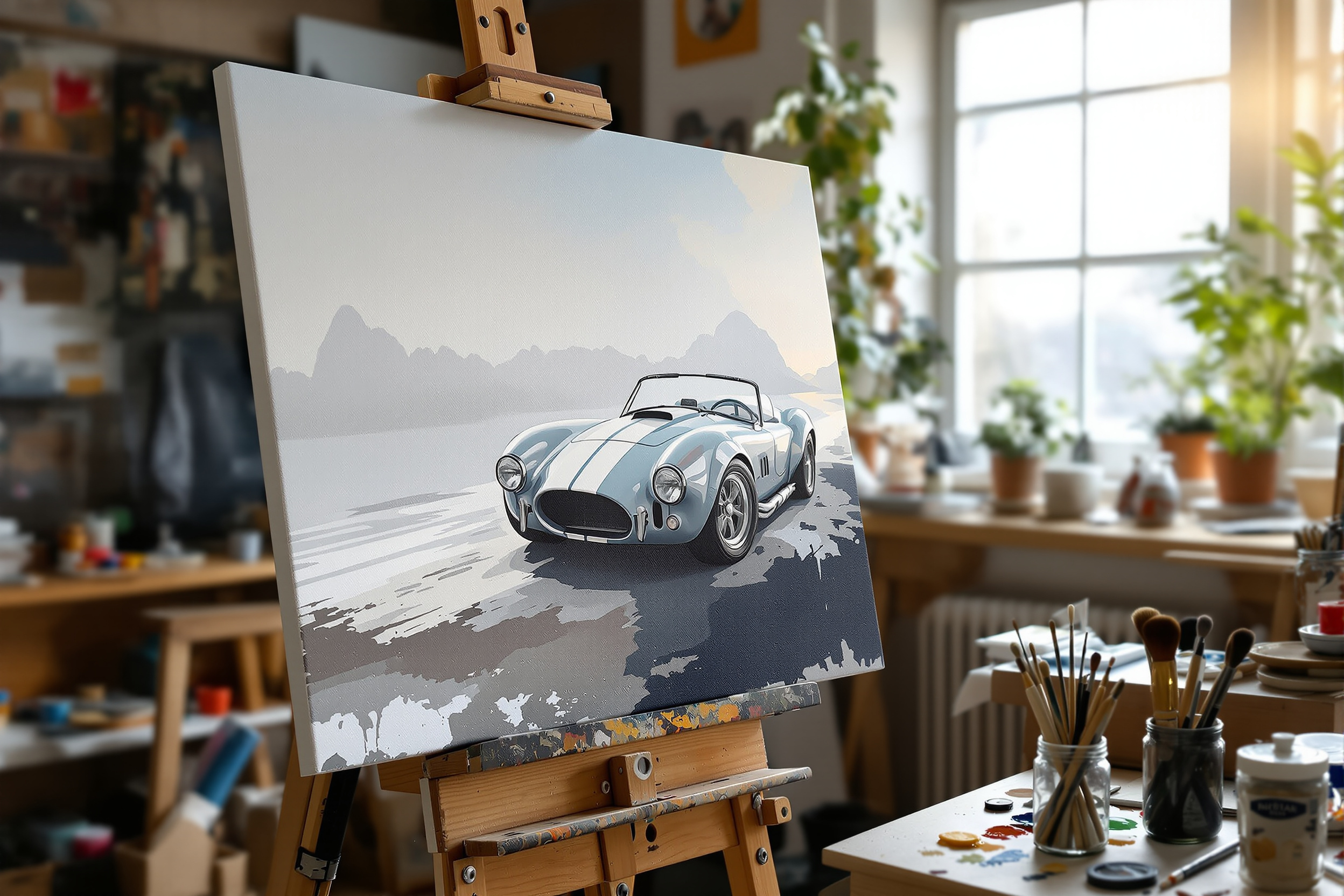
Why Commission Original Artwork?
A photograph records your car; a painting interprets it. A skilled automotive artist can stage your machine in golden evening light on a road it has never driven, put it on the banking of a circuit it never raced, or simply capture the way it sits in your garage — better than memory ever will. Commissions also make exceptional gifts and honors: a retirement, an anniversary, the immortalization of a restoration that consumed a decade of weekends.
Choosing Your Artist
Automotive artists work in a range of styles — from photorealistic to impressionistic — and in a variety of media: oil, acrylic, watercolor, gouache and pencil. The single most important step is reviewing portfolios until you find a style that already moves you. Do not commission a photorealist and ask for loose, dreamy brushwork; pick the artist whose existing work makes you stop scrolling.
A good starting point is the membership of the Automotive Fine Arts Society, the juried organization that has represented the discipline’s leading painters and sculptors since 1983. Regional art fairs, concours art exhibitions and gallery shows are equally good hunting grounds.
Defining the Brief
You select the size, the subject and the setting. Think about:
- Size and orientation — where will it hang? Measure the wall before you talk dimensions.
- Setting — a favorite road, a period racing scene, a stylized studio backdrop, your own driveway.
- Enrichment — many collectors enrich a painting with people, places or pets. A spouse leaning on the fender, the family dog supervising, the house in the background: these details turn a car portrait into a family heirloom.
- Reference material — the more good photographs you can supply (multiple angles, detail shots, honest color), the better the result.
What Does It Cost?
The price of a commissioned artwork depends chiefly on the stature and reputation of the artist, and on the size and complexity of the painting. As general guidance: emerging artists may take on a modest car portrait for a few hundred dollars; established names with concours exhibition credentials command several thousand and up; large, multi-figure compositions sit higher still. Every reputable artist will provide an estimate and specifications before any paint moves.
The Process
- Consultation — you and the artist agree on subject, setting, size, medium, price and timeline.
- Sketch approval — most artists provide a preliminary sketch or study for your sign-off before committing to canvas.
- The painting — expect weeks, not days. Good art keeps its own schedule.
- Delivery — agree in advance on framing, shipping and insurance.
Questions to Ask Before You Sign
- How many revisions are included at the sketch stage, and what do additional changes cost?
- Who owns reproduction rights? (Customarily the artist retains them — meaning your car may appear in prints. If that matters to you, negotiate it up front.)
- What is the realistic timeline, and what happens if it slips?
- Is a deposit required, and is it refundable if the sketch stage fails to converge?
- Will the work be varnished, and how should it be lit and insured once home?
None of these questions offend a professional — they signal a serious client, and serious clients get the artist’s best work.
The process of creating something of such personal pride is genuinely exciting — enjoy it. And once the piece is on the wall, our FAQs cover how to light, frame and care for it. For inspiration on what masterful automotive staging looks like, see our love letter to the Delahayes.