Braking News · Resources
Free Resource: 90 Years of Racing History on Your Screen
There was a time when researching racing history meant letters to clubs, trips to libraries and the patience of a saint. No longer. Digitized motorsport archives now put roughly ninety years of racing history on your screen — photographs, programs, entry lists and films — and the best of it costs exactly nothing.
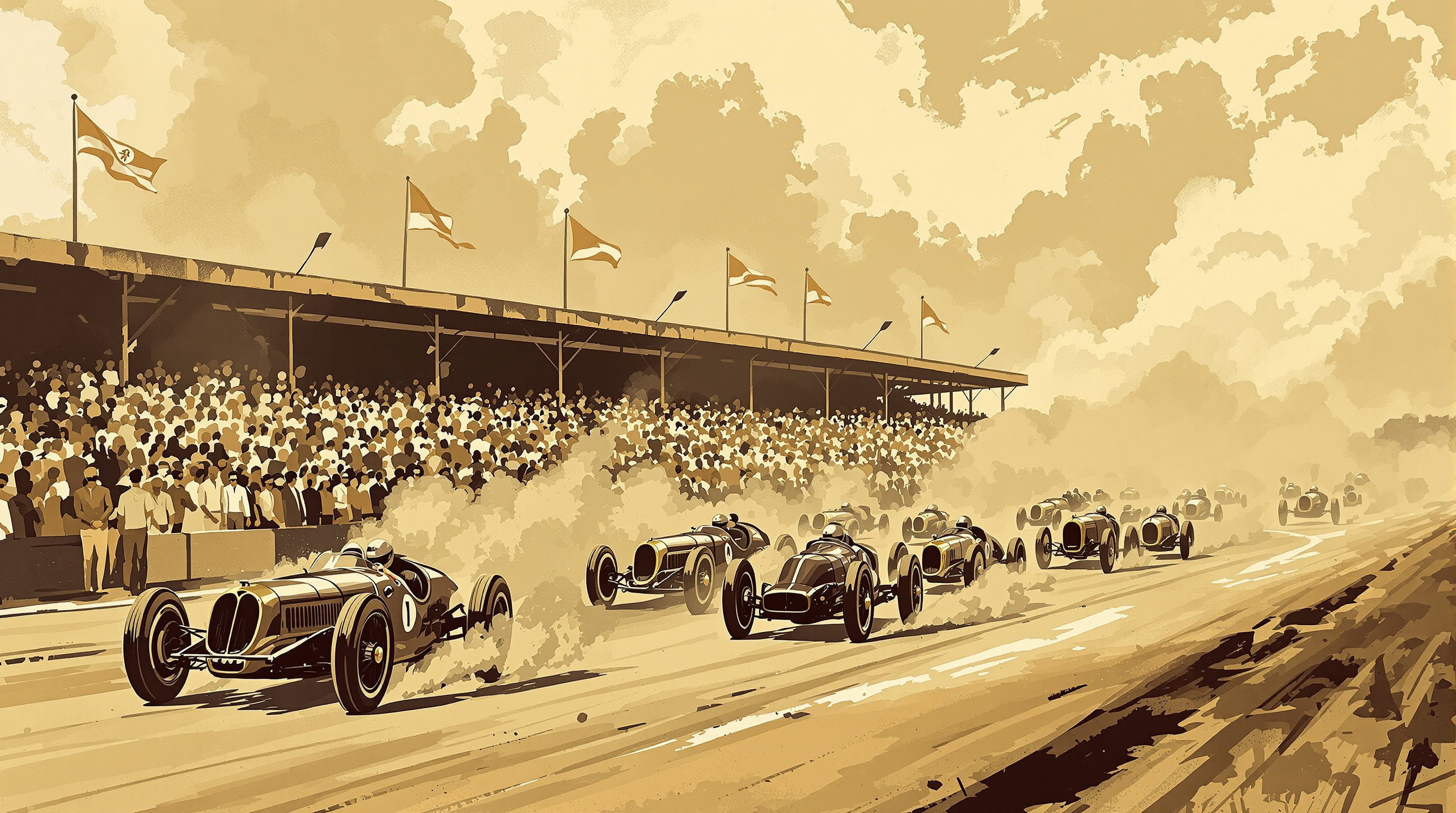
Where the Treasure Is Buried
Two institutions anchor the field. The International Motor Racing Research Center in Watkins Glen, New York, preserves an extraordinary collection of motorsport documents, photographs and films spanning nearly a century of competition — and its staff genuinely answer research questions. The Revs Institute in Naples, Florida, complements it with the Revs Digital Library: hundreds of thousands of period automotive and racing photographs, scanned at high resolution, browsable free from your couch.
Beyond the big two: national libraries (poster art and early motoring photography), museum collections with online catalogs, marque clubs digitizing newsletters back to the 1950s, and the manufacturers’ own heritage archives, several of which publish historical material in dribbles that reward patient bookmarking.
What You Can Actually Do With It
- Trace a real car’s racing history. Chassis numbers, entry lists and period photos let you follow a single machine across decades of competition — catnip for restorers and provenance hunters.
- Verify details for art and models. Painters and modelers use period photography to confirm liveries, sponsor placement, wheel types and even tire lettering for a specific race weekend. (Every serious commission begins with exactly this research.)
- See the posters at work. Digitized paddock photos show the great racing posters pasted to period fencing, doing their original job of selling speed to passersby.
- Lose an evening gloriously. Search a favorite circuit and a decade, and accept that dinner will be late.
Give as Well as Take
These archives grow the same way they began: people handing over boxes. If a relative raced, crewed, photographed or simply spectated with a camera, those negatives, programs, pit passes and scrapbooks are history — and research centers actively welcome donations, with curators who will assess material and preserve attribution. Oral history projects likewise record the memories of mechanics, timers and corner workers while they can still be recorded. The grandest cars always find protectors; it is the paper and the voices that vanish. Donating a shoebox of 1960s paddock photographs may contribute more to racing history than any sum of money you could comfortably write.
Search Like an Archivist
Three tips from experience. Search by event and year rather than driver names (period spellings vary wildly). Try the foreign-language spelling of circuits and races — archives index documents in their original tongue. And when you find gold, note the collection and image number; digitized archives reorganize, and citations are how you find your way back.
These institutions run on donations and deserve them. Ninety years of racing history, free, forever, on your screen — the people who scanned all of it are heroes of the hobby. Our full list of buried-treasure resources lives in the resources guide.