Braking News · Collecting
Owner’s Manuals for Lovers of Classic & Vintage European Cars
Everyone collects the obvious things: the cars, the art, the models. Meanwhile, one of the most rewarding corners of the hobby hides in plain sight on swap meet tables — original owner’s manuals and factory literature for classic and vintage European cars. Beautiful, historically vital, and still surprisingly affordable.
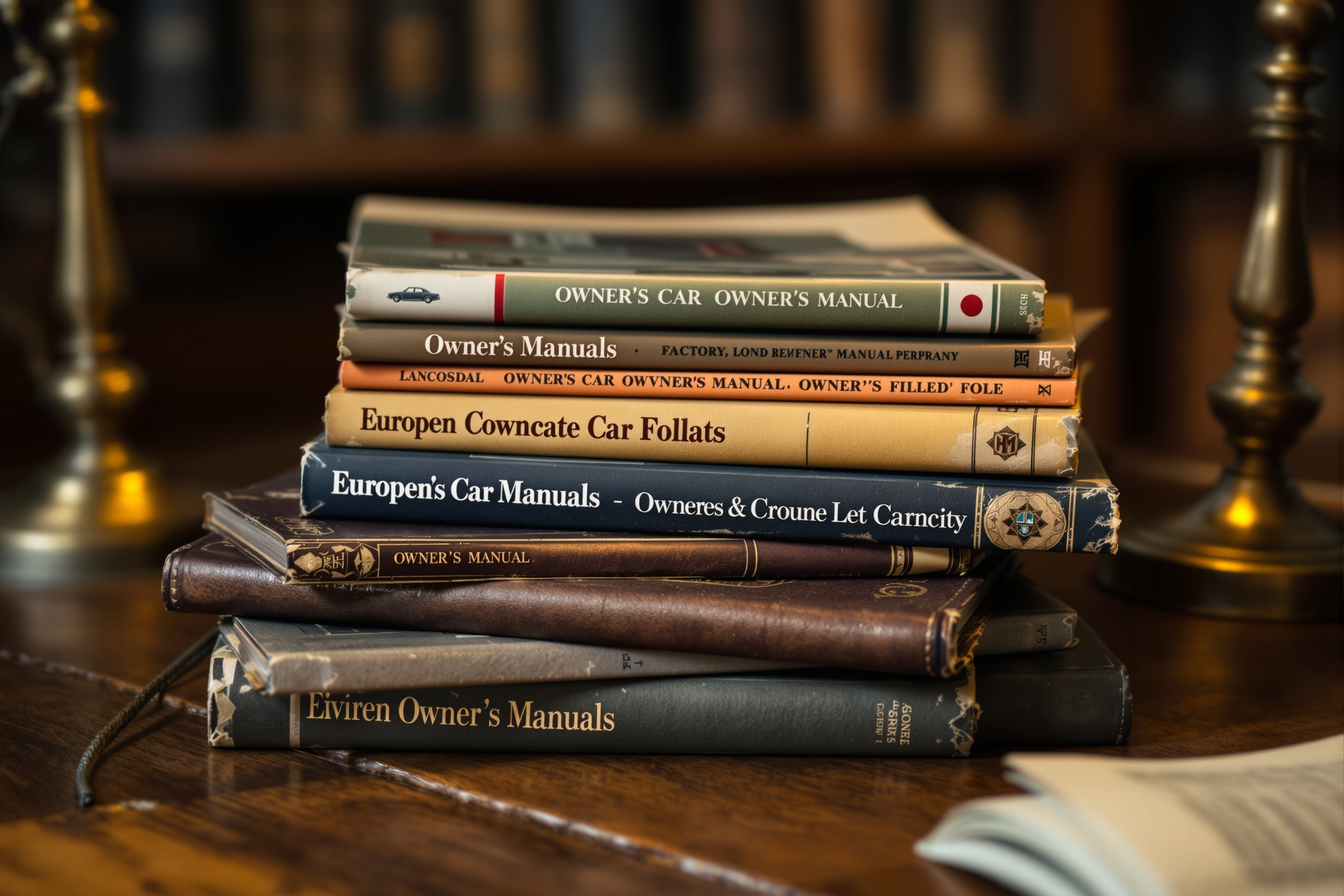
Why Manuals Matter
Originality. For serious restorations and concours judging, complete documentation — owner’s manual, service booklet, toolkit card, even the dealer wallet — counts toward authenticity, and judges notice. A correct first-printing manual in the glovebox is the finishing touch no reproduction quite replaces.
Engineering insight. Period manuals explain the car as its makers understood it: starting drill for carburetors and chokes, running-in schedules, lubrication charts with greasing points modern owners forget exist. For anyone maintaining a vintage European car, the factory’s own words remain the best first reference.
Design history. These booklets are artifacts of their era’s graphic design — lovely typography, hand-drawn cutaway illustrations, optimistic period photography. A framed page spread from a 1950s manual is automotive art at swap-meet prices.
What Collectors Look For
- First printings matching the car’s production year — later reprints are useful but less prized.
- Completeness: supplements for radios and heaters, service vouchers intact, dealer stamps (a stamped service book tells the car’s life story).
- Condition: grease-thumbed is honest and acceptable; mold and missing pages are not. Beware water damage — it travels.
- Language and market: a home-market manual in the original language can matter for concours; a period English-language export edition is often more usable.
What the Market Looks Like
Pricing runs a wonderfully wide gamut. Common postwar manuals for volume models trade for the cost of lunch; scarce first-edition booklets for low-production sports and grand touring cars can reach into the hundreds; and complete original document sets for the blue-chip pre-war marques — manual, service book, coachbuilder correspondence — sell like the artifacts they are, occasionally at four figures. Reproduction literature exists for nearly everything and serves honest purposes (use the copy in the garage, preserve the original in a sleeve), but reproductions must be sold as such; an undisclosed reprint priced as an original is the literature world’s most common trap. As ever: buy the documentation with documentation.
Where to Hunt
Specialist automotive literature dealers, marque club archives, autojumbles and estate sales are the classic sources — and research libraries can fill knowledge gaps even when they won’t sell you anything. The Revs Institute library maintains one of the world’s great collections of factory literature, and the AACA Library & Research Center answers documentation questions for hundreds of marques. Once found, store manuals like the works on paper they are: acid-free sleeves, away from sunlight and damp — the same care our resources guide recommends for prints.
Best of all, this is collecting you can actually use. The art hangs on the wall; the manual rides in the glovebox, quietly making the car more itself.